

Ubud
אובוד
Indonesia
Jungle temples, rice terraces, surf, and cafés in every village.
Best season
Apr – Jun
Drier months
Flight time
~16 hours
from Israel
Weather
24°–31°
in September
Suggested budget
₪4,800
for 7 days
Bali has several speeds: Canggu and Seminyak for surf and sunsets, Ubud for temples, yoga and rice fields, and the north (Lovina / Amed) for quiet and waterfalls. The island looks small; traffic is not. Do not squeeze south and north into one day.
Hindu culture is everyday life: offerings on the pavement, ceremonies, modest dress at temples. Stay a few nights in each area instead of changing hotels daily.
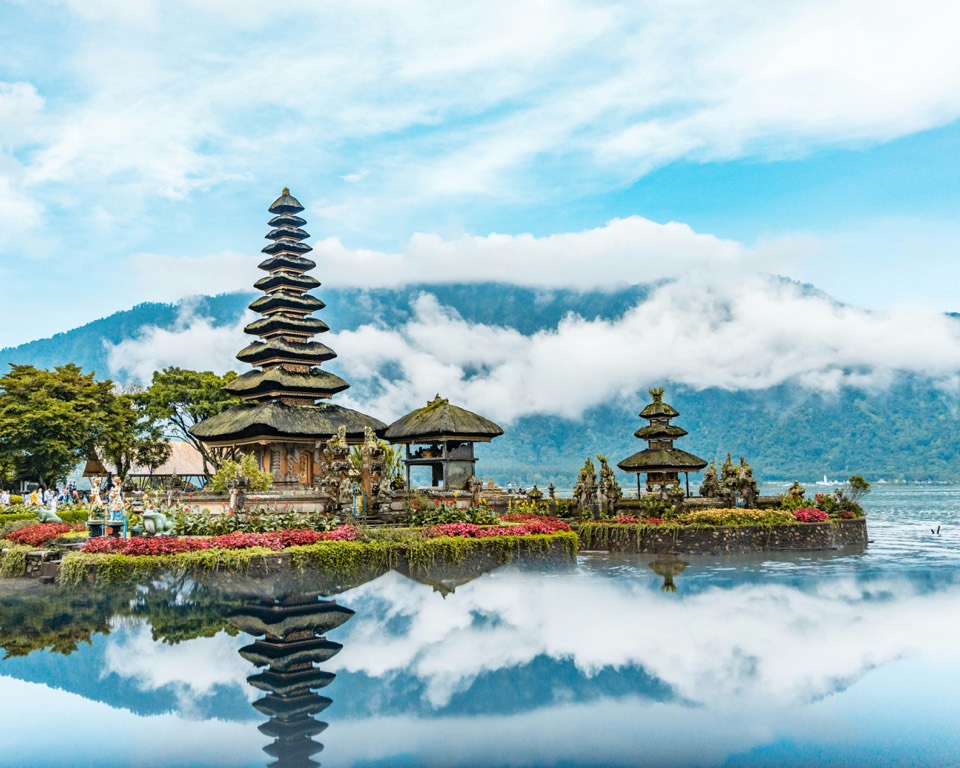
A sea temple on the rocks at sunset, and a lake temple in the highlands — two faces of sacred Bali.
Tegallalang or quieter village paths, plus Ubud Market; the monkey forest is optional.
A surf lesson in Canggu or Kuta, or snorkeling around Nusa and Padangbai for calmer water.
Sekumpul, Tibumana, or a sunrise on Mount Batur — a cooler day after the beach.
Babi guling, nasi campur, local warungs, and coffee farms near Kintamani or Ubud.
Nasi campur, babi guling, beach warungs, and coffee in Ubud.


Ubud
אובוד

Tanah Lot
טנה לוט

Canggu
קאנגאסן

Rice terraces
טרסות אורז
Amalfi
Italy
Cliffs over the Mediterranean, colorful villages, and lemons everywhere.
Dubai
United Arab Emirates
Towers, desert, old souks, and a beach that works almost year-round.
Miami
United States
Art Deco, Atlantic beach, Latin food, and neighborhoods that each speak a different language.
Santorini
Greece
White-and-blue caldera, sunsets, volcanic wine, and black-sand beaches.
Bali follows a monsoonal climate: a relatively dry season and a wet season, without a cold winter. Temperatures stay warm most of the year — the real difference is rainfall frequency, humidity, and how busy the island feels. This section expands the short “best season” note without repeating the south / Ubud / north split already covered above.
On the south coast (around Denpasar–Kuta–Canggu), July–September tend to be among the drier months in long-term averages. Showers can still happen, especially inland and in the hills. It is a comfortable window for beaches, surf, and day trips — and also when visitor numbers climb in the European/Israeli summer peak.
The Asian monsoon brings more rain around the turn of the year. December–February are typically among the wetter months in Denpasar’s historical averages. Rain often arrives in heavy bursts and then clears — it is not always an all-day washout. Ubud paths, waterfall approaches, and highland roads can be muddier or slower after strong rain.
The south coast is usually drier than the inland belt around Ubud and the highlands (Bedugul / crater lakes). In the same “dry” month, Ubud can still see more showers than Canggu. The north and east (Lovina, Amed) often feel quieter — but travel time from the south is driven by traffic, not just map distance.
Peak dry months (especially July–August) are better for sun and sea, but hotels, cars, and day drivers fill up faster. April–June and September–October often combine relatively dry weather with less midsummer pressure. In the wet season you may get more schedule flexibility — and sometimes more availability — in exchange for humidity and a higher chance of reshuffling outdoor days.
BMKG defines the start of wet/dry seasons with sequences of ten-day (dasarian) rainfall thresholds — not a fixed calendar date. Season onset therefore shifts by year and by zone across the island. El Niño / La Niña and local swings can wet a “dry” month or dry parts of a “wet” season. Before you fly, check a current BMKG (or other reliable) forecast for your exact dates.
The table summarizes typical south-coast patterns. Ubud and the highlands are often wetter in the same months.
January
February
March
April
May
June
July
August
September
October
November
December
The island looks small, but same-day south–north hops eat hours in traffic. Prefer one base per day-block and a dedicated move day between blocks — without promising exact drive times, because traffic varies.
Pick one main axis: the south (beach + one sea temple) or Ubud (temples, terraces, slower days). If you insist on both — three–four nights south and two–three in Ubud, with one move day. Skip the north in the same week.
Two bases work well: for example five nights in the south/Canggu and four in Ubud, or swap one base for quieter east-coast Amed if you want snorkeling and a slower pace. Keep one flexible day for rain or fatigue.
Three realistic blocks: south → Ubud → north or east (or a night or two on Nusa Penida if the sea is a priority). After each move, spend at least one night at the new base before long outings. Two weeks also leaves room for a true rest day without ticking every temple.
Open Nubo’s trip planner with Bali preselected, then set your dates and preferences.
Plan a Bali tripPrimary sources: BMKG’s monsoonal pattern and dasarian season definition; long-term Denpasar climate normals BMKG contributes via WMO; regional rainfall differences from BMKG / Stasiun Klimatologi Bali normals. These are averages and patterns — not a forecast for a specific trip.